
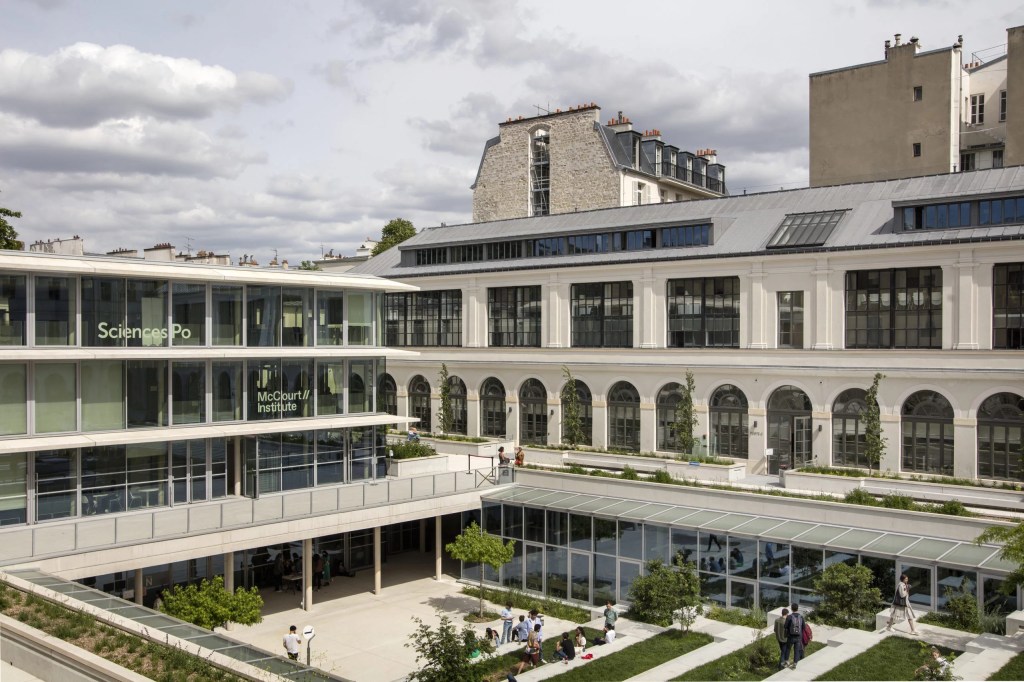
On November 22, we are organizing a symposium at SciencePo Paris for the interdisciplinary study of metanoia/personal transformation. Our symposium will bring together leading international researchers and practitioners around the issue of metanoia. We aim to approach this topic from a number of angles: theoretical (what is personal change?), normative (what is the relationship between change and virtue?), methodological (how can we measure such change?) and practical (for example, examining practices and experiences in prisons, psychotherapy and pastoral spiritual direction). We want to look at this issue at both individual/agency and social/structural levels. We also wish to examine examples of virtuous and vicious change, as well as the normative presuppositions that underpin these distinctions.
By bringing into dialogue studies of personal transformation from both individual and collective/structural perspectives, this meeting aims to offer a more holistic and nuanced understanding of this complex phenomenon, and to encourage reflection on the epistemological issues that this field of inquiry entails.
The process of radical personal transformation can be observed in a variety of contexts, such as religious and political conversion, ideological change, criminal desistance and radicalization. These processes involve complex interactions between internal psychological and spiritual factors and external social and environmental factors. For example, work on cognitive and emotional transformation and the construction of meaning (Garcet, 2021) shows how individuals adopt radical beliefs or become involved in extremist movements, often motivated by personal uncertainties and perceived injustices (Doosje et al., 2013). Transformative experiences can profoundly alter an individual’s knowledge, values and perspectives (Arvan, 2020, Brieley, 2023). Research into personal transformation and metanoia also raises questions about the notion of a “true self” that might be discovered through deliberate spiritual practice (Nouwen, 1991) or through the stages of individuation (Jung, 1951) or self-actualization (Rogers, 1961, Maslow, 1962). Others have questioned the conditions under which personal identification can be said to persist through change (Locke, 1690, Parfitt, 1984).
On a collective scale, radical transformations encompass phenomena such as the Christian transformation of Europe (Holland, 2019), the Cultural Revolution in China (Kyo, 2017, Fishman 2011) or the Nazi Cultural Revolution (Chapoutot, 2017). These revolutionary movements show how radical social transformations can redefine cultural norms and practices, permanently affecting social structures and collective attitudes (Drury & Reicher, 2000; Unger, 1998). These moments of rupture are often associated with the idea of “the birth of the new man” in the socialist (Marx & Engels, 1845, Trotsky, 1924, Mao, 1957) and fascist (Gentile, 1916, Rosenberg, 1930) traditions, describing either a transformative change in living people, or a seismic generational shift in norms and attitudes. At the same time, some revisionist historians have challenged the identification of revolutions with radical change, stressing instead the dynamics of social inertia and continuity over time (Furet, 1978, Doyle, 1980).
Understanding the very notion of transformative personal change poses a number of methodological and epistemological challenges. Can radical transformations be measured objectively? Quantitative and qualitative methods each have their advantages and limitations. Can each discipline learn from the others for a more complete understanding of these phenomena? Research into socially dysfunctional behaviors (e.g. Settoul, 2022) can enrich research into functional transformations (see, for example, the work of Johnson and Sung Json Jang). How can we question the very notion of rupture in the academic world?

 Center for Metanoia Studies (Centre d'Etudes Interdisciplinaires de la Métanoïa)
Leave a comment